Mould surveys · Liverpool & the North West
Mould and condensation surveys
Black mould is a sign that something in the home is out of balance. We find out what — and set out practical steps to stop it coming back, rather than just cleaning it off.
Why mould keeps coming back
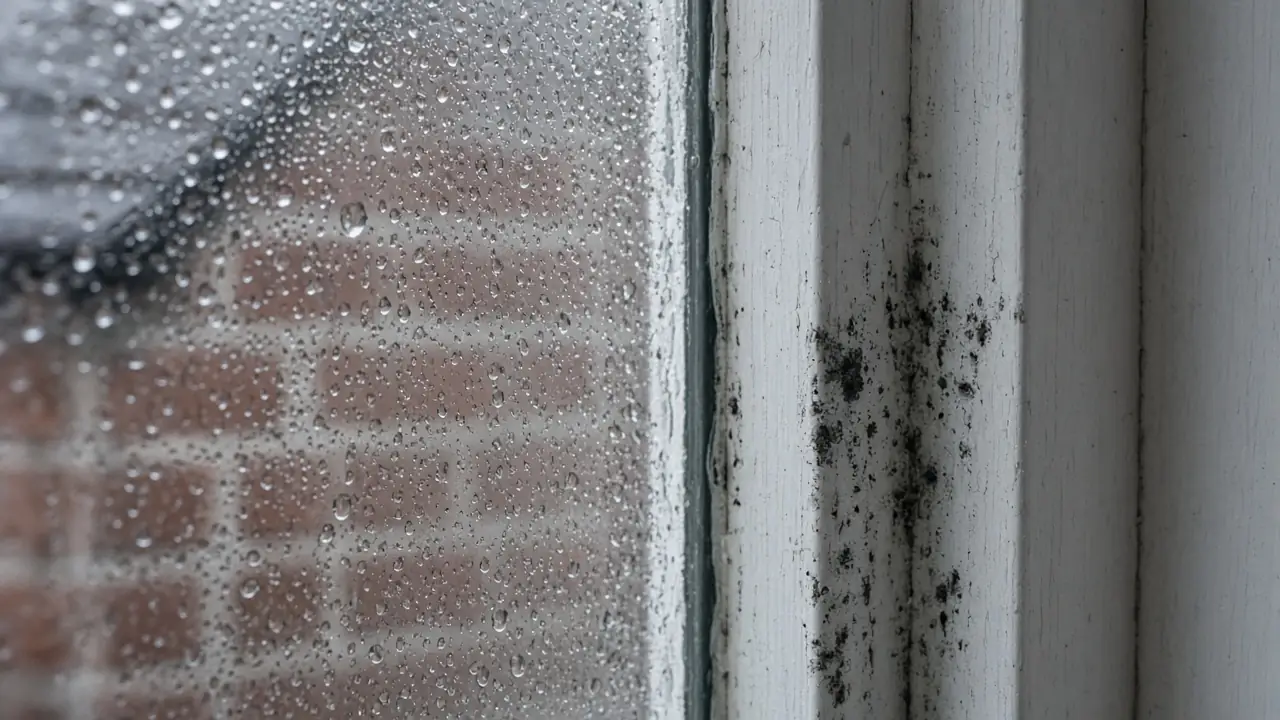
Mould needs moisture. Wiping it away, or painting over it with anti-mould paint, treats what you can see but not the moisture that feeds it. Unless the source is dealt with, it returns — often in the same corner, every winter.
In many homes the moisture comes from condensation: everyday activities like cooking, bathing and drying clothes put water vapour into the air, which condenses on the coldest surfaces. But mould can also be fed by penetrating damp, leaks or ground moisture — and those need a completely different fix.
What a mould survey looks at
- Where the mould is, how far it extends and what it is growing on
- Relative humidity, vapour pressure and surface temperatures in the affected rooms
- Cold spots and thermal bridges — corners, window reveals, lintels, external walls
- Extract fans, trickle vents and airflow, and whether they work as intended
- Heating — whether rooms can realistically be kept warm enough
- Any building defects letting water in that could be feeding the mould
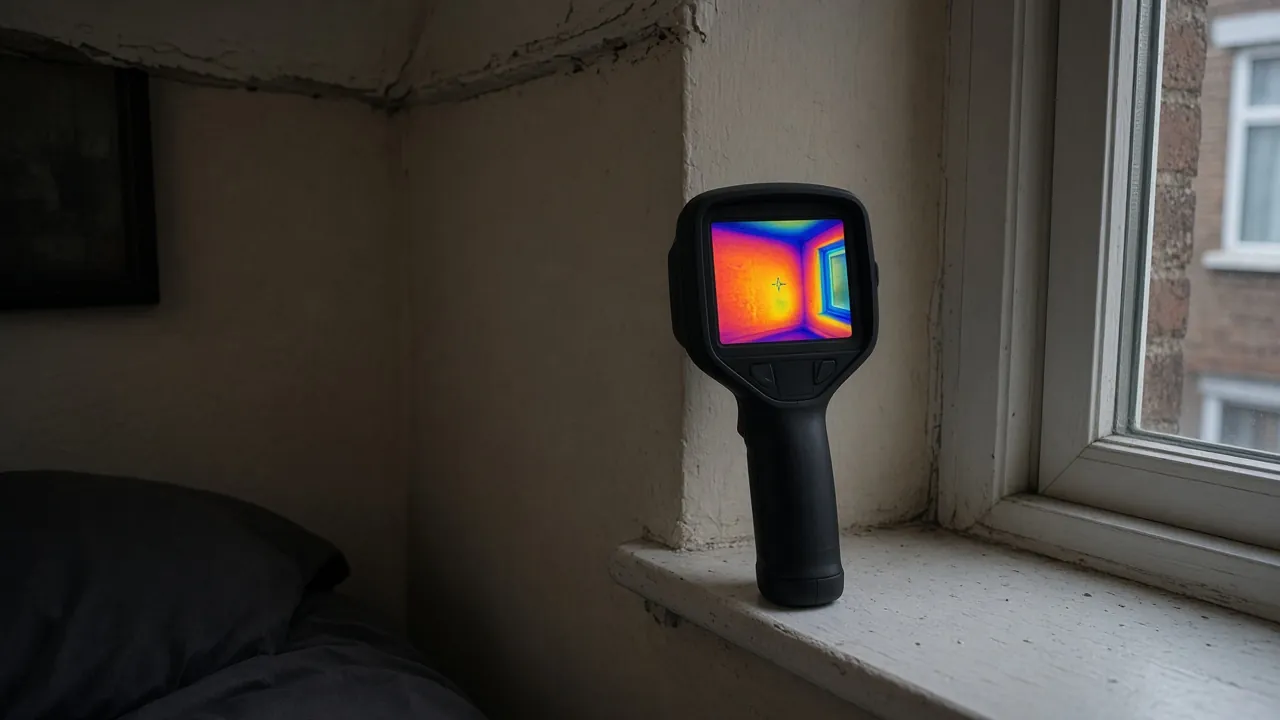
Depending on what we find, this can involve humidity and moisture readings with a Protimeter MMS3, psychrometric readings that include vapour pressure (a measure of how much water vapour is in the air), thermal imaging to locate cold surfaces, and a Testo 417 vane anemometer to check airflow at extract fans and vents. See the tools we use.

Why it matters
Damp and mould can affect people’s health, particularly children, older people and anyone with a respiratory condition or weakened immune system. Government guidance for housing providers sets out the health risks and expects landlords to act on damp and mould promptly and to tackle the underlying causes: Understanding and addressing the health risks of damp and mould (GOV.UK).
We approach every inspection respectfully. Mould is not a judgement on the people living in the home — it usually comes down to how the building performs.
What you receive
A plain-English report with photographs and readings, the likely cause or causes, the risk to occupants and prioritised recommendations — separating quick, practical measures from building works that need planning.
Further reading: Found mould at home? What tenants and landlords should do.
Related services
Need an independent view?
Tell us about the property and what you need. We’ll reply by email to confirm scope, timing and a quotation.