A damp patch on a wall tells you something is wrong, but not what. Government guidance for housing providers describes four main types of damp in homes — condensation, penetrating, rising and “traumatic” damp (leaks and escapes of water). Each has a different cause, and the right fix for one can be the wrong fix for another.
Condensation
Condensation happens when moisture produced inside the home — from cooking, showering, drying clothes and simply breathing — cools and condenses on colder surfaces. Government guidance describes it as the most common form of damp.
Typical signs
- Water droplets on windows and frames, especially on cold mornings
- Black mould in corners, around window reveals, and behind wardrobes and sofas on external walls
- Worse in winter, in bedrooms and in kitchens and bathrooms
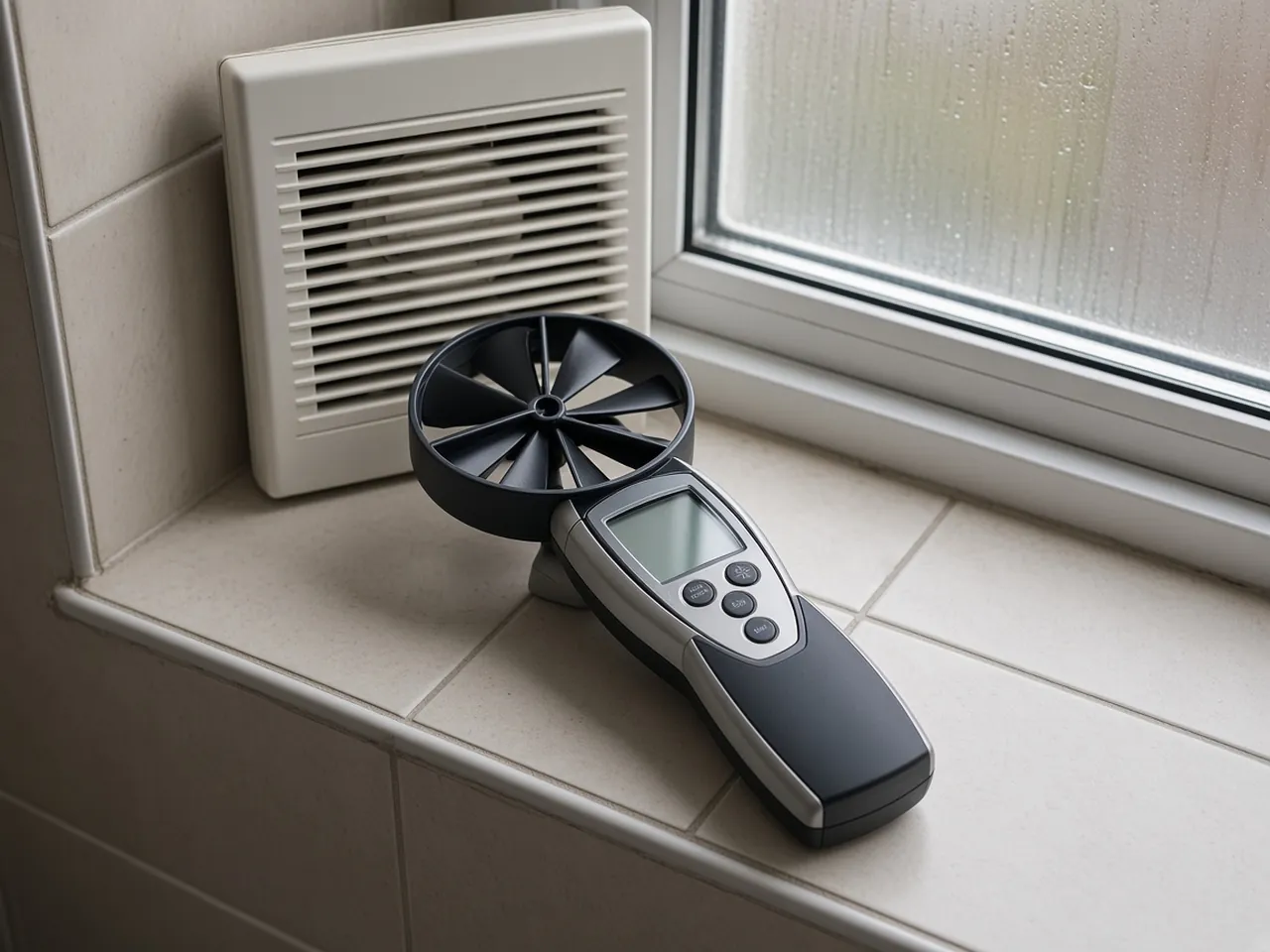
Condensation is usually a balance problem: too much moisture, not enough ventilation, and surfaces that are too cold. Thermal imaging can help show where surfaces are coldest, and a Testo 417 vane anemometer can check whether extract fans are actually moving air. As part of our psychrometric readings we also record vapour pressure, which indicates how much water vapour is in the air and helps assess the risk of condensation. Fixes typically involve working extract fans, trickle vents, adequate heating and dealing with cold spots — not chemical damp-proofing. See mould and condensation surveys.
Penetrating damp
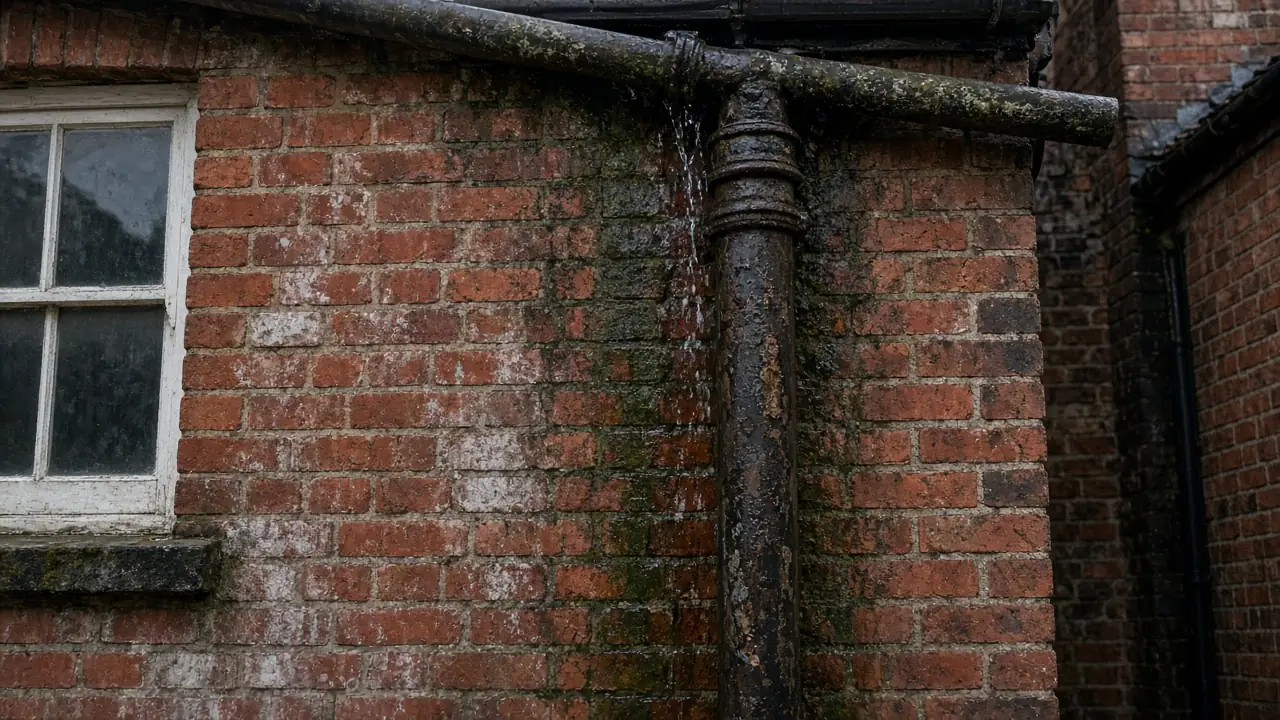
Penetrating damp is water getting in from outside through defects in walls, roofs, windows or floors. On Liverpool’s older terraces, common culprits include leaking gutters and downpipes, slipped slates, failed flashings around chimneys, defective pointing and poorly detailed window sills.
Typical signs
- Damp patches that grow or darken after rain
- Staining on external walls, chimney breasts or ceilings below roof defects
- Damage often localised to one area rather than spread around the room
Roof and high-level defects are not always visible from the street. Where it helps, we use a DJI Air 3S drone for a closer look at slates, chimneys, flashings and gutters.
The fix is to repair the defect letting water in, then allow the wall to dry out.
Rising damp
Rising damp is moisture from the ground rising through walls and floors in contact with the ground. Government guidance notes that it is usually found in older properties, is often misdiagnosed, and that chemical testing is the most appropriate way of confirming it. Often it is due to a defective damp-proof course or membrane — or one that has been bridged by raised paths, soil, render or internal plaster.
Typical signs
- Dampness and staining low on ground-floor walls
- Salt deposits and decayed plaster or skirting boards
- External ground levels at or above the damp-proof course
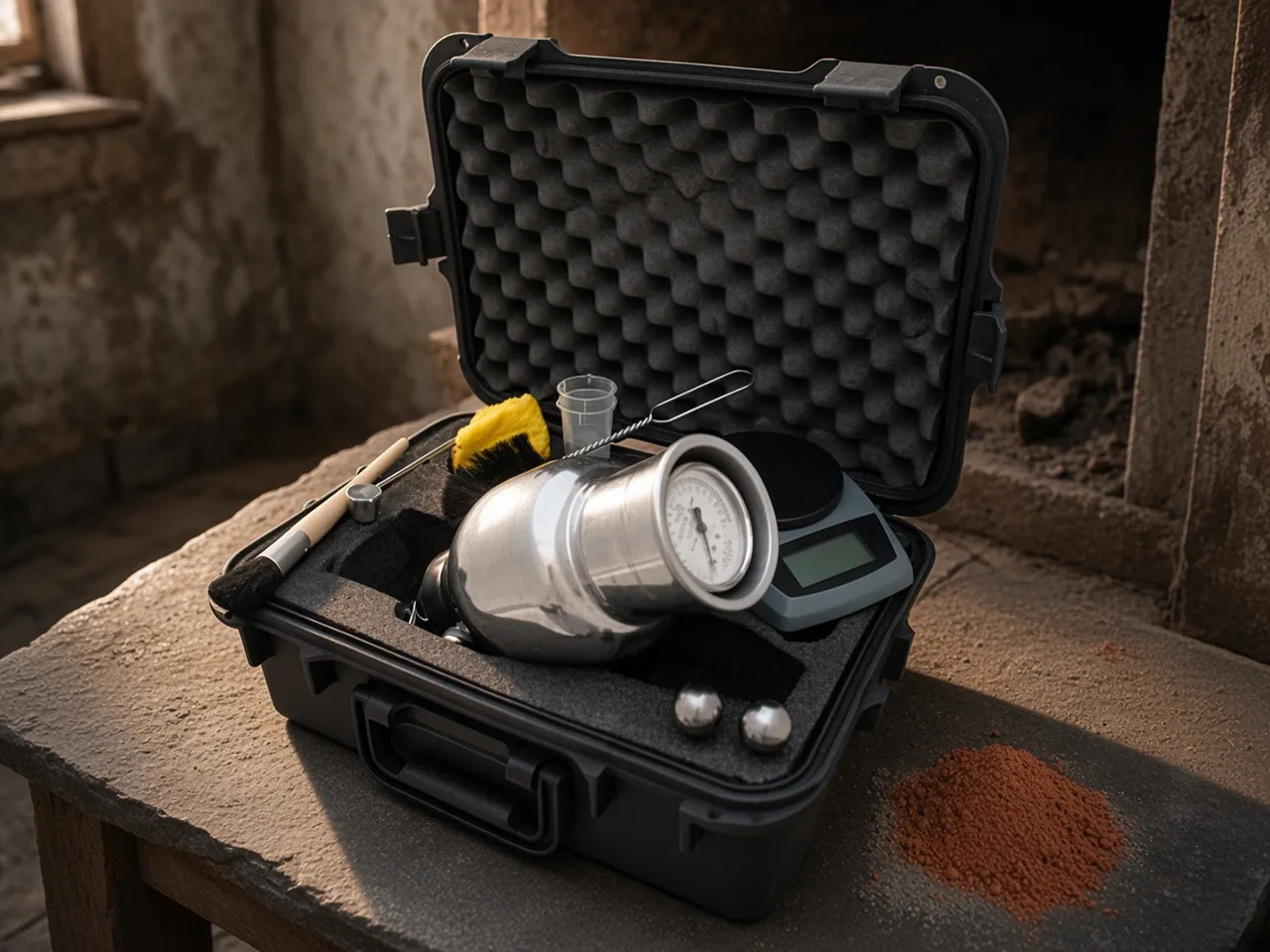
Because condensation and penetrating damp can produce similar-looking marks at low level, rising damp should be confirmed by investigation before anyone pays for an injected damp-proof course. Surface meter readings alone can mislead here, so where it is needed we take samples for salts analysis and use calcium carbide testing to measure moisture content within the wall, alongside readings from a Protimeter MMS3 moisture meter.
Leaks and “traumatic” damp
This is water escaping from waste or heating pipes, overflowing baths and sinks, burst pipes or tanks — or coming from outside, for example from a neighbouring building or flooding. It often appears suddenly and is linked to a specific source.
Why the diagnosis matters
A home can have more than one type of damp at once — for example a leaking gutter making a wall colder and wetter, which then attracts condensation. Treating the wrong cause wastes money and leaves the problem, and the mould, in place. That is why we recommend an independent diagnosis before committing to remedial works.
Source
Damp and mould: understanding and addressing the health risks for rented housing providers (GOV.UK). Checked 10 November 2026.
Get an independent view
Our damp and mould surveys identify which type of damp is present, explain why, and set out prioritised recommendations. We don’t sell treatments or remedial works.